

Overview
This case study focuses on optimizing the user experience in online shopping for retail products. It then details some key design decisions that seek to solve the most common challenges for both users and retail companies, addressing usability, accessibility and efficiency issues in the shopping process.
Company
Freelance
My role
Product Designer
Timeline
2 months
Responsabilities
Market research, visual design, prototyping
In 2024, I came up with an idea to improve Google Shopping with a "Virtual Try-On" using AI, and in May 2025, Google launched an update that’s almost identical! It was clear this was going to happen, but it’s motivating to see something I had in mind come to life—by the same company! We're still brainstorming new ideas to keep innovating. You can check out my proposal
here
and Google’s update
here.
Google try-on
Models
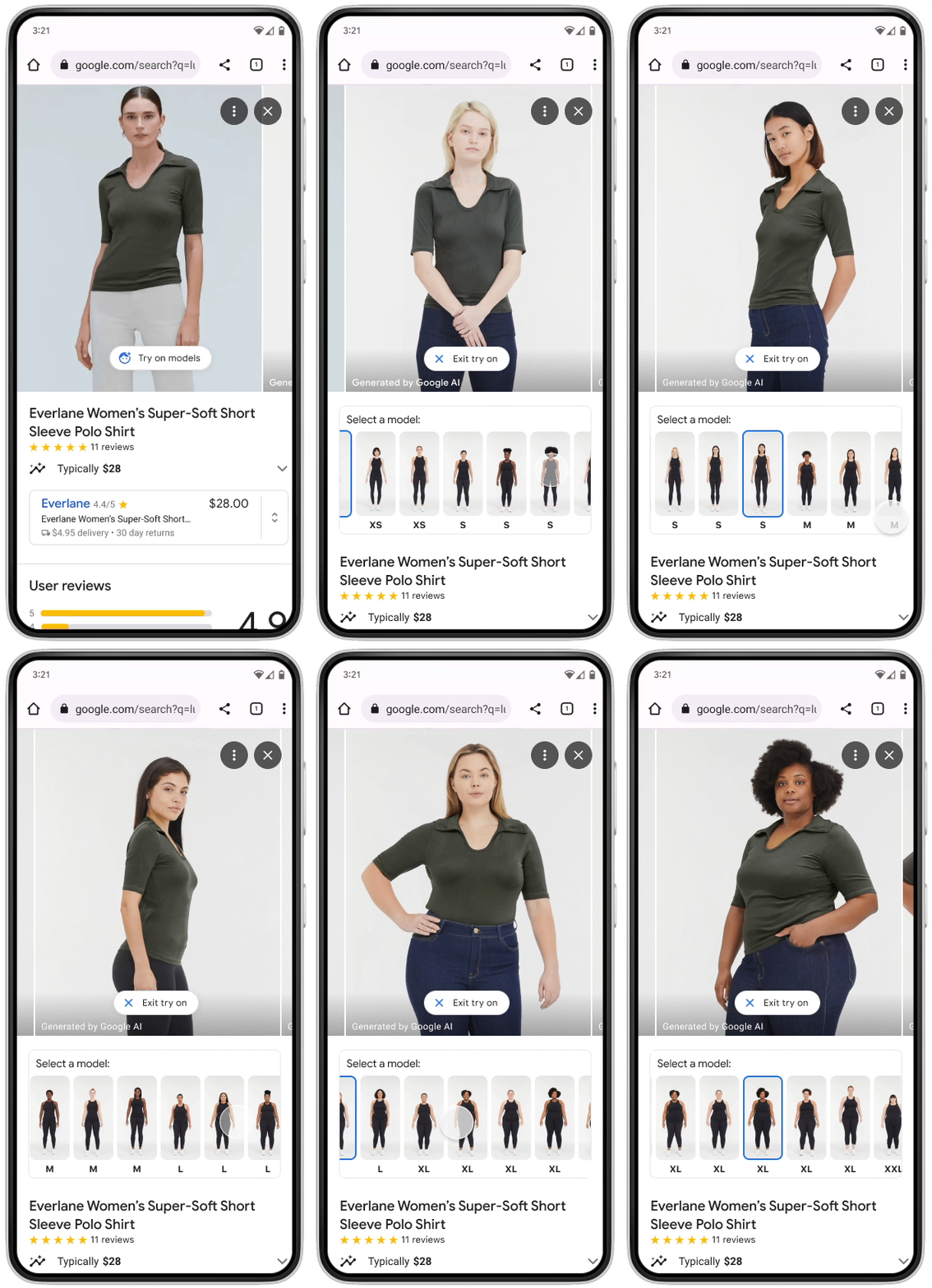
Google try-on
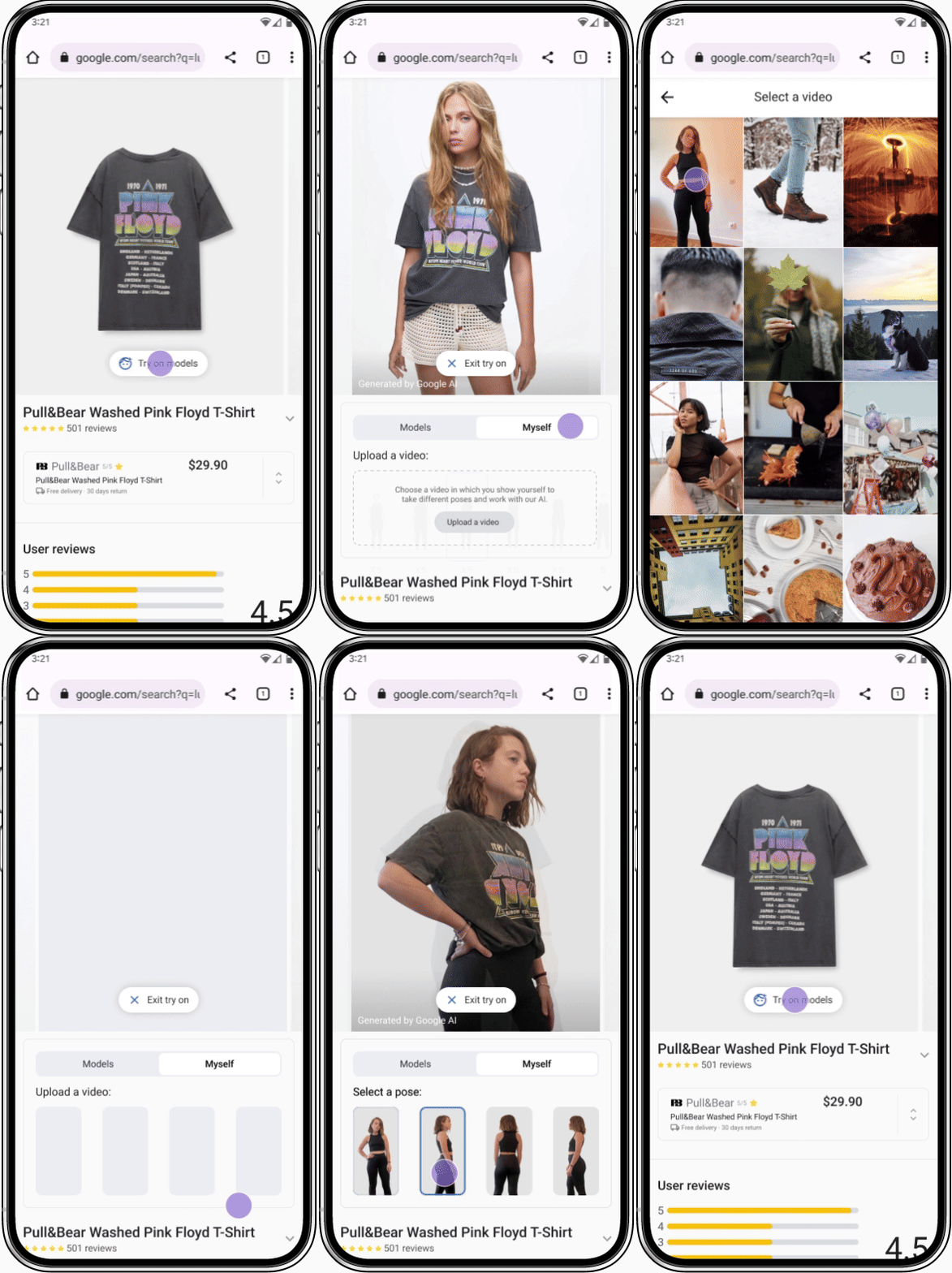
Myself
Value prop
For users
With "Try-on myself", shoppers can upload a short video of their body. From this, the system generates frames in different postural positions where garments are realistically adapted. This approach offers a more accurate, inclusive, and personalized shopping experience — reducing dissatisfaction with online purchases.
For brands
By adopting this technology, brands can reduce product returns, boost customer satisfaction , and stand out in the market with a strong competitive advantage. Delivering a hyper-personalized shopping journey positions them as innovative and customer-first.
Research & Analysis
Online clothing returns
The average return rate for online purchases is 15.2%, three times higher than the return rate for purchases in physical stores, which is 5%. In other words, for every $100 spent on online purchases, an average of $15 is returned, while for every $100 spent in physical stores, $5 is returned.
No Data Found
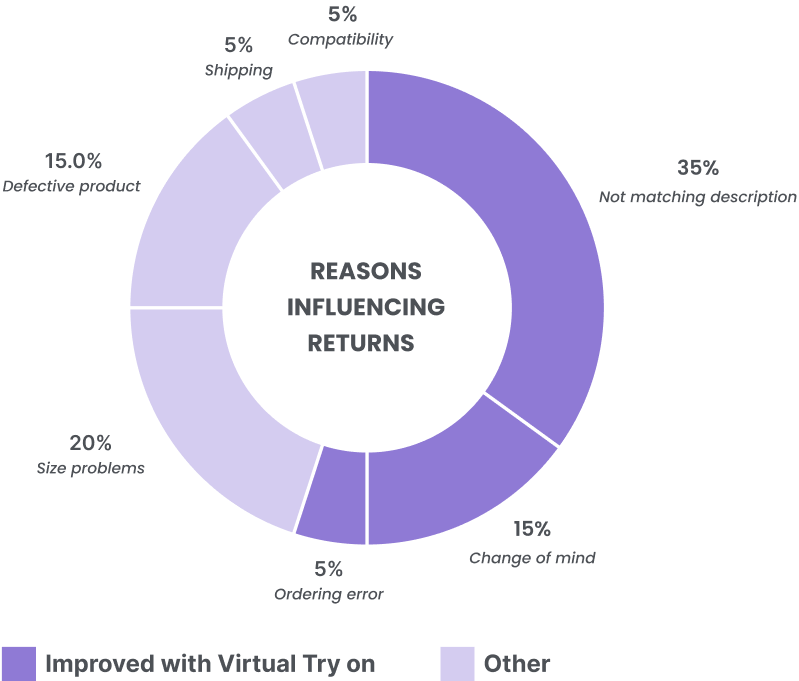
Damage to the business
Product returns in e-commerce represent a significant expense for companies. Costs include reverse logistics, returns processing, product replacement and inventory reinstatement.
These can amount to between 100-200€ per return, and in some cases represent up to 4% of an online store's turnover.
Large companies such as Amazon and others are implementing measures to reduce the financial impact, such as charging for returns or penalizing users who abuse the system.
How AI makes Virtual On more realistic
This case study focuses on optimizing the user experience in online shopping for retail products. It then details some key design decisions that seek to solve the most common challenges for both users and retail companies, addressing usability, accessibility and efficiency issues in the shopping process.
Click here for more information on this technology.

Creating Try-on myself
Opening a new possibility
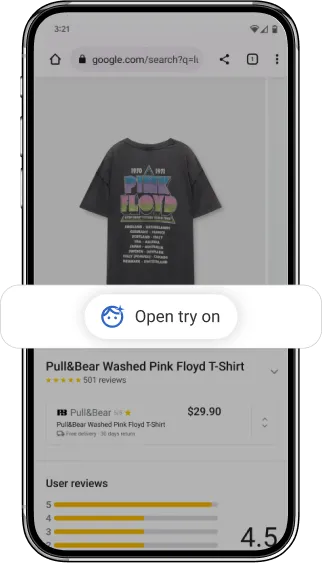
At this step, the user enters the Open Try On flow, designed as a clear entry point into the virtual try-on experience.
The interaction starts with predefined models, offering a quick and familiar way to visualize garment fit.
For deeper personalization, the user can extend the experience by applying AI to see the garment on themselves.
This dual pathway balances accessibility and innovation, addressing different user needs while supporting confident purchase decisions.
The interaction starts with predefined models, offering a quick and familiar way to visualize garment fit.
For deeper personalization, the user can extend the experience by applying AI to see the garment on themselves.
This dual pathway balances accessibility and innovation, addressing different user needs while supporting confident purchase decisions.
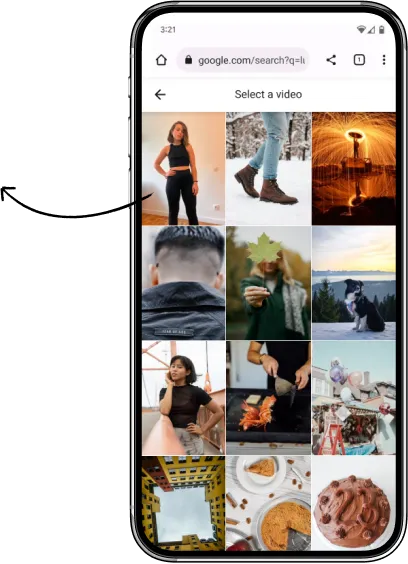
A video of you posing
At this step, the user can select a short video from their gallery where they appear posing in different positions.
The AI extracts key frames from the clip, analyzing posture and lighting to generate realistic garment try-ons.
This approach offers a more dynamic preview compared to static images, simulating movement and multiple angles. If no video is provided, the flow defaults to Google’s preset models, ensuring inclusivity and consistency.
The AI extracts key frames from the clip, analyzing posture and lighting to generate realistic garment try-ons.
This approach offers a more dynamic preview compared to static images, simulating movement and multiple angles. If no video is provided, the flow defaults to Google’s preset models, ensuring inclusivity and consistency.

And now, let's see how it looks on you!
In the final step, the user sees the garment applied to their own image through AI-driven rendering.
They can switch between different poses to view the fit from the front, back, left, and right angles. This interaction provides a more complete sense of how the garment adapts to their body and movement.
A persistent link to the product page remains visible at the bottom, ensuring seamless access to purchase.
They can switch between different poses to view the fit from the front, back, left, and right angles. This interaction provides a more complete sense of how the garment adapts to their body and movement.
A persistent link to the product page remains visible at the bottom, ensuring seamless access to purchase.
Potential impact
The implementation of an artificial intelligence-based technology such as Tryon Diffusion, which allows users to try on clothing virtually and realistically through personalized videos, has the potential to generate a significant impact on both consumer behavior and business operations. The potential impact of this technology on several levels is detailed below:
Returns ↓
Allowing users to view garments on their own body improves purchase accuracy, reducing returns and improving customer satisfaction.
Revenue ↑
Reducing returns significantly reduces logistics costs and improves inventory efficiency, which reduces overhead.
Sustainability ↑
Fewer returns mean less shipping and packaging, which reduces the carbon footprint and waste of unsaleable clothing.
Retention ↑
The personalized shopping experience increases confidence in online shopping, encouraging loyalty and repeat purchases.
Competitive advantage ↑
Companies using this technology stand out and attract more customers with an innovative shopping experience.
Data analysis ↑
AI can collect data on consumer behavior to optimize inventories, marketing campaigns and product recommendations.
Learnings
Throughout this project, several key learnings were applied to strengthen both the design process and the final user experience.
Artificial intelligence implementation
User Experience (UX) in Interactive Digital Products
Optimization for Mobile Devices
Prototype, Analysis and Evaluation
...
Work in progres
It will be finished in a few weeks !

sandramv.com
Built and designed with a looooot of effort from Madrid ❤️